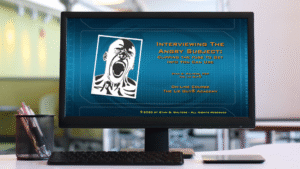
Interviewing the Angry Subject:
De-escalation Tactics That Work
Interviewing Angry Subjects:
What Every Interviewer Should Know
Interviewing angry subjects isn’t about overpowering emotion or “regaining control” — it’s about recognizing how anger alters cognition, communication, and cooperation.
When interviewers misdiagnose anger as defiance or deception, they escalate resistance, contaminate information, and lose the interview.
This course teaches how to diagnose anger early, apply targeted de-escalation strategies, and restore productive dialogue so usable information can be recovered without coercion or shutdown.
What You Will Learn
- Why anger shows up in interviews—and what it often disguises.
- The different types of anger and how each one should be handled.
- What to say—and what to avoid—when emotions start to boil.
- How to redirect rage into cooperation using tactical communication.
- The key mistakes interviewers make that escalate anger instead of diffusing it.
Why It Matters
Anger in the interview room isn’t just uncomfortable—it’s dangerous. When interviewers react poorly, angry subjects become more volatile, resistant, or even manipulative. This course shows you how to stay calm, stay safe, and stay in control—while still getting results.
Who Should Register
- Investigators and first responders who encounter hostile or combative subjects.
- Interviewers who want to stay in control when emotions escalate.
- Anyone who needs a tactical plan for de-escalating interviews while staying productive.
What happens in the interview room echoes in the courtroom.™